Availability: In Stock

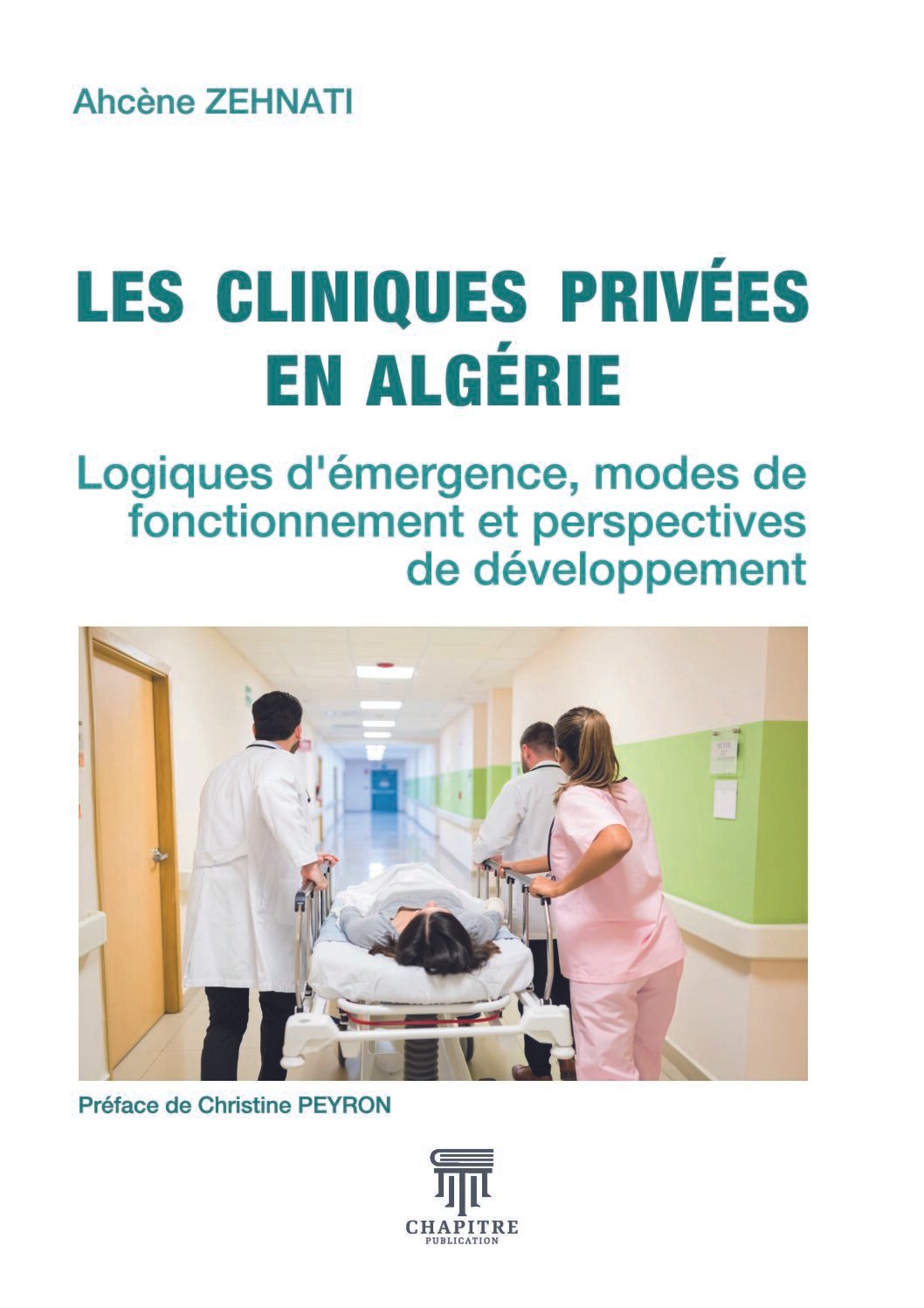
PRIVATE CLINICS IN ALGERIA: Reasons for their emergence, operating models and prospects for development

4,300 DZD

In Algeria, the healthcare landscape has changed with the emergence and expansion of the for-profit private healthcare sector, particularly in the form of ‘private clinics’, thereby bringing an end to the public sector’s three-decade-long dominance. This has resulted in a hybrid healthcare system in which a public sector characterised by numerous shortcomings appears to be fuelling a rapidly growing private sector. A trend that began in the late 1980s, the expansion and considerable growth of this sector’s activities have continued unabated. After more than thirty years in existence, private hospital care has gradually spread across the whole country, although it is much more prevalent in the major cities. Today, 516 clinics are in operation, a third of which are dedicated to haemodialysis. Paradoxically, the momentum of the private healthcare sector has not been matched by the development of private health insurance, which for the time being remains very marginal. In 2021, turnover from health insurance accounted for 0.75% of the non-life insurance sector. The liberalisation of the healthcare sector has fuelled a debate characterised by bias and a lack of arguments based on studies and research. It is perceived by some analysts as the commodification of healthcare, which creates a two-tier healthcare system and contributes to widening inequalities in access to care. For others, it is desirable given the state of disrepair of the public sector and the inefficiencies that characterise it. As for clinic owners, they believe it is urgent to incorporate the dynamism of the private sector into national health policy. The public sector alone is unable to meet the ever-increasing demand for healthcare. The private sector, which is more flexible and responsive, should be accepted as a complementary player. Their main demand remains the establishment of contractual relationships with social security bodies, thereby ensuring that a much broader range of services can be covered. In this book, the author examines the reasons behind the emergence of private clinics, how they operate and the prospects they offer. To this end, two approaches have been combined. The first is macroeconomic in nature, drawing on data from health and administrative information systems. This data, which was often difficult to obtain, is at times incomplete or inconsistent in terms of the time period or scope covered. Whilst this presents a challenge, it also contributes to the value of the study. This initial data has enabled us to identify the key characteristics of private clinics. The second approach is microeconomic in nature, involving ad hoc exploratory surveys conducted in the wilayas of Algiers and Bejaia amongst 16 clinic founders and 40 permanent doctors at these clinics.


Description

In Algeria, the healthcare landscape has changed with the emergence and expansion of the for-profit private healthcare sector, particularly in the form of ‘private clinics’, thereby bringing an end to the public sector’s three-decade-long dominance. This has resulted in a hybrid healthcare system in which a public sector characterised by numerous shortcomings appears to be fuelling a rapidly growing private sector. A trend that began in the late 1980s, the expansion and considerable growth of this sector’s activities have continued unabated. After more than thirty years in existence, private hospital care has gradually spread across the whole country, although it is much more prevalent in the major cities. Today, 516 clinics are in operation, a third of which are dedicated to haemodialysis. Paradoxically, the momentum of the private healthcare sector has not been matched by the development of private health insurance, which for the time being remains very marginal. In 2021, turnover from health insurance accounted for 0.75% of the non-life insurance sector. The liberalisation of the healthcare sector has fuelled a debate characterised by bias and a lack of arguments based on studies and research. It is perceived by some analysts as the commodification of healthcare, which creates a two-tier healthcare system and contributes to widening inequalities in access to care. For others, it is desirable given the state of disrepair of the public sector and the inefficiencies that characterise it. As for clinic owners, they believe it is urgent to incorporate the dynamism of the private sector into national health policy. The public sector alone is unable to meet the ever-increasing demand for healthcare. The private sector, which is more flexible and responsive, should be accepted as a complementary player. Their main demand remains the establishment of contractual relationships with social security bodies, thereby ensuring that a much broader range of services can be covered. In this book, the author examines the reasons behind the emergence of private clinics, how they operate and the prospects they offer. To this end, two approaches have been combined. The first is macroeconomic in nature, drawing on data from health and administrative information systems. This data, which was often difficult to obtain, is at times incomplete or inconsistent in terms of the time period or scope covered. Whilst this presents a challenge, it also contributes to the value of the study. This initial data has enabled us to identify the key characteristics of private clinics. The second approach is microeconomic in nature, involving ad hoc exploratory surveys conducted in the wilayas of Algiers and Bejaia amongst 16 clinic founders and 40 permanent doctors at these clinics.

Additional information

Author Ahcène ZEHNATI
Weight

250 g

Dimensions

23.5 × 15.5 × 2 cm

select-format

Paperback

ISBN

978-9969-9937-0-7

Publication date

2025

Language

French

Publisher

CHAPTER

Reviews

There are no reviews yet.

Be the first to review “LES CLINIQUES PRIVÉES EN ALGÉRIE, Logiques d’émergence, modes de fonctionnement et perspectives de développement”

Your email address will not be published. Required fields are marked *